Table of Contents (12 sections)
As we look into 2026, the automotive industry is poised for revolutionary changes through virtual automotive technology. This article explores several key trends that are shaping the future of driving, providing insights into how these technologies will impact mobility, safety, and the overall driving experience.
1. Enhanced Augmented Reality (AR) Interfaces
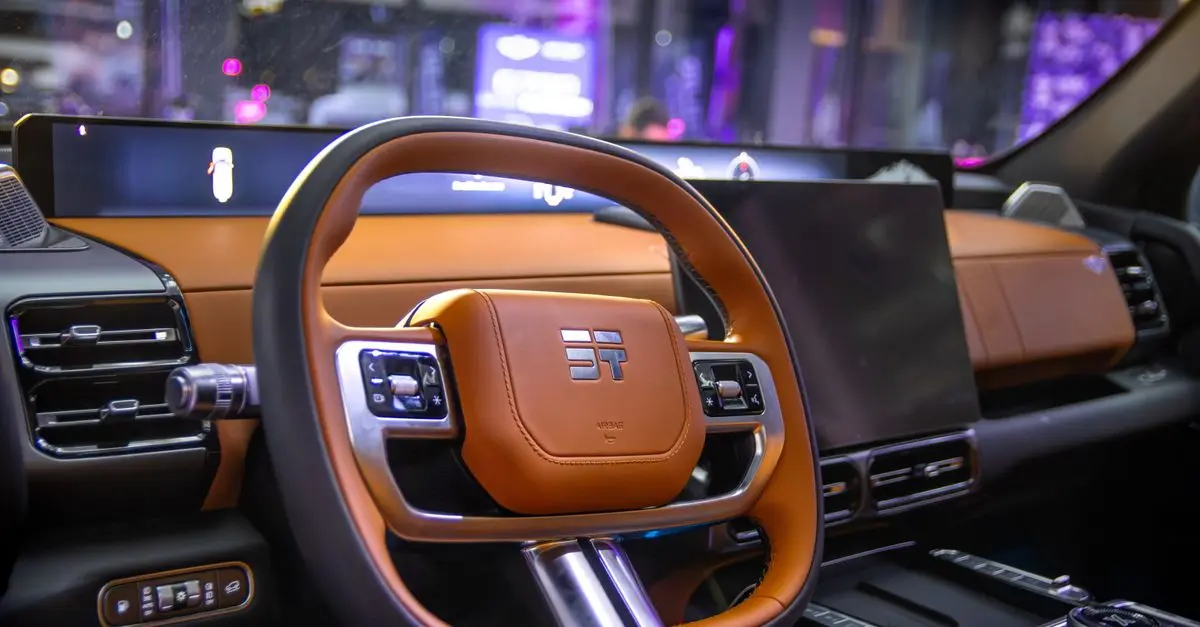
Augmented reality technology is rapidly advancing, and in 2026, we expect to see highly sophisticated AR interfaces in vehicles. These systems are designed to project crucial information onto the windshield, allowing drivers to view navigation, speed, and vehicle performance without taking their eyes off the road. For instance, brands like Mercedes-Benz and BMW are already integrating AR technology into their vehicle models, enhancing driver awareness and reducing distraction.
The importance of these developments cannot be overstated. A survey by Statista indicates that 75% of drivers prefer heads-up displays over traditional instrument panels, as they provide a more immersive driving experience. With AR applications, drivers will also enjoy features like real-time hazard detection projected directly onto their field of vision.
Additionally, the seamless integration of AR with advanced driver-assistance systems (ADAS) will aid in navigation, allowing vehicles to suggest routes based on real-time traffic data. This blend of information and context not only upgrades safety but also personalizes the driving experience, making it more intuitive.
💡 Expert Opinion: Experts predict that by 2028, nearly 50% of newly produced vehicles will feature some form of AR interface, setting the stage for what would become standard in automotive technology.
2. AI-Driven Personalization
In 2026, automobile manufacturers are harnessing the power of artificial intelligence to create highly personalized driving experiences. By utilizing data from user behavior, AI systems can adjust seat positions, climate controls, and even audio preferences before the driver enters the vehicle. Brands like Tesla are leading this charge, using machine learning algorithms to adapt to individual driver habits.
This trend is vital as it not only enhances comfort and satisfaction but also improves safety by reducing the time drivers spend adjusting settings. A study by Gartner has shown that vehicles with adaptive technologies can reduce incidences of distracted driving by up to 20%.
For example, if a driver frequently listens to a particular playlist during their commute, the system might automatically queue it up when it detects that the driver is behind the wheel. AI-driven personalization transforms the vehicle into a more conscious entity designed to cater specifically to the driver's needs.

European Men's Standing Collar Trend, Spring And Autumn New Leather Ja, Handsome Motorcycle Suit, Youth Oversized
Voghion Global
Sponsored by Fashion Trend
3. Digital Twins
The concept of digital twins is revolutionizing not just automotive manufacturing, but also how vehicles are maintained post-sale. In 2026, we anticipate a growing adoption of this technology, which involves creating a digital replica of a vehicle that can monitor its performance in real time. Companies like Volkswagen and Ford are investing heavily in this technology.
Why is this significant? Digital twins facilitate predictive maintenance, allowing manufacturers to anticipate issues before they become serious problems, thus saving drivers time and money. According to a report from McKinsey, fleets utilizing digital twin technology can reduce vehicle downtime by up to 30%. By enabling real-time data analysis, drivers can receive alerts when maintenance is required, improving vehicle safety and longevity.
Moreover, digital twin technology can also be used in simulations for enhancing driving experience, helping manufacturers test new features effectively without the need for physical prototypes.
4. Immersive Virtual Reality (VR) Experiences
Virtual reality isn’t just for gaming anymore; in 2026, it’s set to become an essential part of the car-buying process. Car dealerships are expected to leverage VR technology to create immersive experiences, allowing potential customers to explore vehicle interiors, test features, and even take virtual test drives from the comfort of their homes.
Such experiences not only streamline the car-buying process but can also lead to increased customer satisfaction. A survey from Porsche revealed that customers exposed to VR show a greater likelihood of purchasing a vehicle compared to those who were not, due to the enhanced understanding of the vehicle's features.
The fact that virtual experiences can reach customers worldwide is a game changer, especially in a post-pandemic world where personal interactions are often limited. Expect to see companies significantly invest in VR solutions as a standard part of the sales strategy.
5. Blockchain for Enhanced Security
As cars become smarter and more interconnected, the need for robust security is paramount. In 2026, blockchain technology is anticipated to play a critical role in securing automotive networks. By creating decentralized records of vehicle transactions and data exchanges, manufacturers can enhance security against cyber threats significantly.
The application of blockchain technology means that information shared between vehicles and manufacturers is immutable and can be trusted. This is crucial as IoT devices in vehicles continue to proliferate, and automakers need to ensure that the data being exchanged is secure.
According to Accenture, the global automotive blockchain market is expected to exceed $1 billion by 2025, driven by increasing regulatory demands and consumer expectations for data privacy. Overall, blockchain not only secures vehicle systems but also aids in establishing trust among manufacturers, consumers, and service providers.
6. 5G Connectivity
The roll-out of 5G technology in 2026 is set to transform the automotive landscape by enabling real-time communication between vehicles and surrounding infrastructure. This connectivity facilitates advancements such as vehicle-to-everything (V2X) communication, allowing vehicles to exchange information with traffic signals, pedestrians, and other vehicles.
Additionally, enhanced speeds and lower latency promise to improve features like autonomous driving technology, enabling cars to react in milliseconds to changing conditions. According to a report by Ericsson, by the end of 2026, it's projected that over 60% of all vehicles on the road will be connected via 5G networks.
This trend will not only enhance safety but also improve traffic management and reduce congestion, making urban mobility smoother and safer for everyone. Furthermore, it opens doors to new applications that can redefine how we use transportation in our daily lives.
7. Sustainable Virtual Automotive Technology
As the automotive industry continues to address environmental concerns, 2026 will see an increasing focus on sustainable practices within virtual automotive technologies. Many manufacturers are investing in eco-friendly materials and processes to enhance the environmental footprint of their vehicles. Brands including Toyota and Honda are at the forefront, striving to lead the industry in sustainability.
The commitment extends to using augmented reality in manufacturing processes—reducing waste through optimized production techniques and simulations. Companies that adopt sustainable practices are not only mitigating environmental harm but also appealing to eco-conscious consumers, resulting in a potentially lucrative market segment.
By integrating sustainability into the development of virtual automotive technology, businesses can contribute to a better future while fulfilling consumer demand for greener options.
8. Integration of Advanced Driver-Assistance Systems (ADAS)
Finally, the integration of advanced driver-assistance systems is set to evolve significantly in 2026. With the incorporation of machine learning and artificial intelligence, these systems will provide more than just warnings; they will enhance overall driving strategies based on real-time data.
As per the Insurance Institute for Highway Safety, vehicles equipped with such systems have been shown to reduce accidents by 40%. The effective assimilation of ADAS can fundamentally change how drivers interact with their vehicles, promoting safer driving experiences.
By complementing traditional features with predictive capabilities, drivers will be empowered to make informed decisions while on the road, ultimately fostering a safer environment for all road users.
📺 Resource Video
> 📺 For further exploration: Discover how technology is shaping modern vehicles, dive deeper into virtual automotive technologies. Search YouTube: future of virtual automotive technology 2026.
Checklist before purchase
- [ ] Research brands leading in virtual automotive technology
- [ ] Check for AR and VR features in prospective models
- [ ] Evaluate the security features of vehicles
- [ ] Compare personalized AI systems among brands
- [ ] Look for enhancements in ADAS technology
Glossary
| Terme | Définition |
|---|---|
| Augmented Reality (AR) | Technology that overlays digital information onto the real world. |
| Artificial Intelligence (AI) | A branch of computer science focused on creating systems that mimic human intelligence. |
| Blockchain | A decentralized digital ledger that records transactions across many computers. |
🧠 Quiz rapide : What technology is expected to enhance vehicle security by 2026?
- A) Virtual Reality
- B) Blockchain
- C) Augmented Reality
Réponse : B — Blockchain technologies will secure automotive data exchanges, enhancing trust.
📺 Pour aller plus loin : future of virtual automotive technology 2026 sur YouTube
Recommended products
Selected by our experts
European Men's Standing Collar Trend, Spring And Autumn New Leather Ja, Handsome Motorcycle Suit, Youth Oversized
Voghion Global
Sponsored by Fashion Trend